

Image From : gemini.google.com
Navigating the 2026 Cybersecurity Certification Maze
 Sourch : gemini.google.com
In the fast-moving world of cybersecurity, 2026 has brought a new set of challenges. With AI-driven threats becoming the norm and cloud infrastructures growing more complex, a simple “intro to computers” certificate won’t cut it anymore. Employers are no longer looking for “paper tigers”—people with many certifications but no practical skills. They want proof that you can defend a network when things actually hit the fan.
If you’re looking to break in or level up this year, here’s the definitive list of certifications that actually carry weight in the current market.
1. The Starting Line: Entry-Level Essentials
If you’re just starting, your goal is to prove you understand the “language” of security.
-
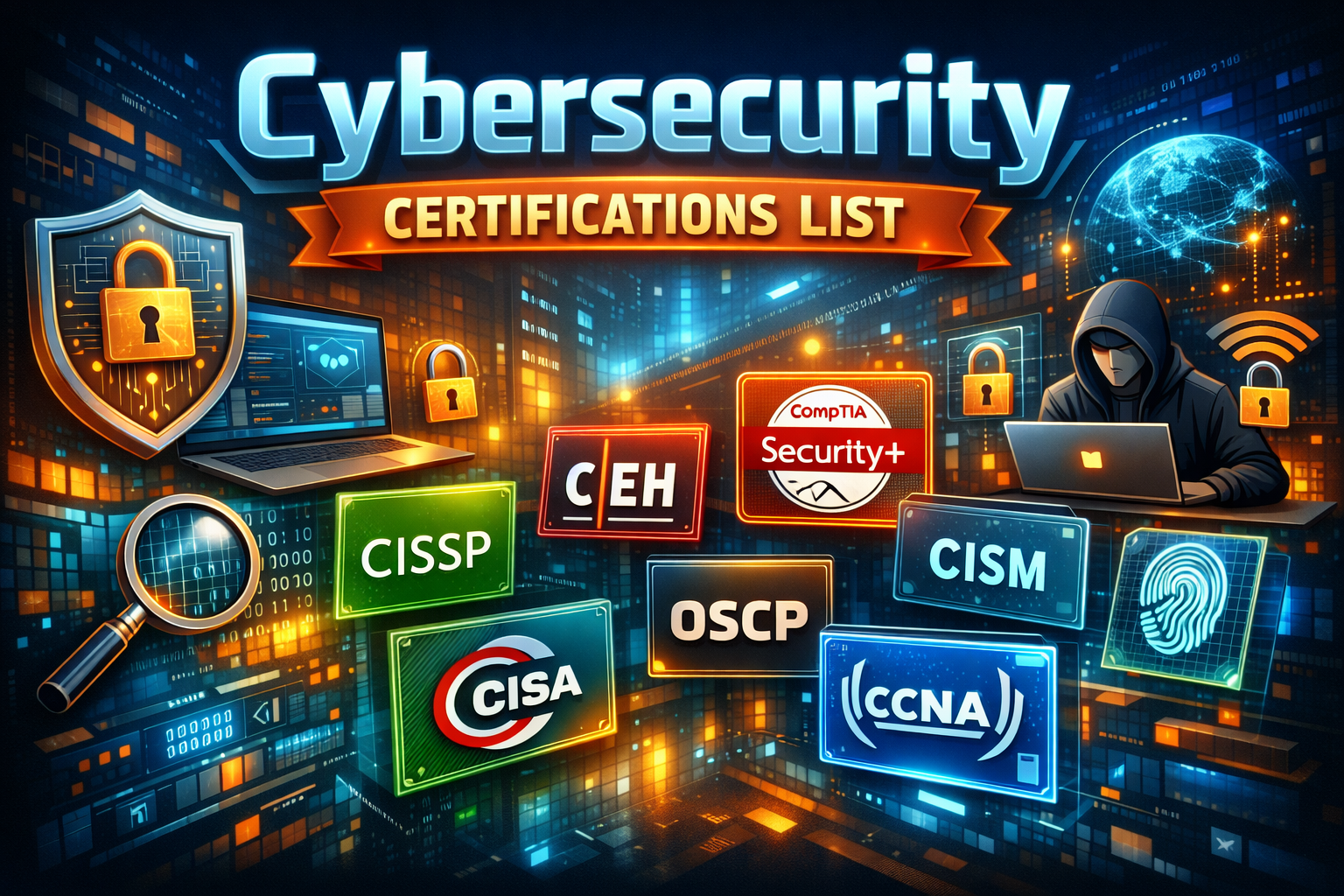
CompTIA Security+ (SY0-701): Still the gold standard for beginners. It’s vendor-neutral and covers the broad basics of risk management and incident response.
-
Google Cybersecurity Professional Certificate: A fantastic, hands-on entry point that actually prepares you for the Security+ exam while teaching you Python and SQL basics.
-
ISC2 Certified in Cybersecurity (CC): A great way to get the “ISC2” brand on your resume early without the 5-year experience requirement of the CISSP.
2. The Practitioner’s Tier: Mid-Level Specialization
Once you have 2–3 years of experience, it’s time to pick a side: Red Team (Offensive) or Blue Team (Defensive).
-
CompTIA CySA+: Perfect for aspiring SOC (Security Operations Center) analysts. It focuses on threat detection and using tools like SIEMs.
-
Certified Ethical Hacker (CEH v13 / AI): The latest version now includes heavy modules on AI-assisted hacking. It’s widely recognized by government and corporate recruiters.
-
Microsoft SC-200: If you’re working in a Windows-heavy environment (which is most of the corporate world), this certification for Security Operations Analysts is high-value.
3. The “Gold Standard” & Leadership: Advanced Level
These are the heavy hitters. Earning one of these usually results in a significant salary bump.
-
CISSP (Certified Information Systems Security Professional): Often called the “mile wide and inch deep” cert, it remains the most requested credential for management and senior architecture roles.
-
OSCP (Offensive Security Certified Professional): Unlike multiple-choice exams, this is a 24-hour grueling practical test. If you want to be a top-tier penetration tester, this is your badge of honor.
-
CISM (Certified Information Security Manager): For those moving away from the keyboard and into the boardroom. It focuses on governance and risk management.
A Note on 2026 Trends: Cloud and AI
Don’t ignore the cloud. Certifications like AWS Certified Security – Specialty or Azure Security Engineer (AZ-500) are becoming mandatory as companies move away from physical servers. In 2026, a security pro who doesn’t understand cloud architecture is essentially obsolete.